Timing Belt in Oil
30 October 2025

Timing Belt in Oil

Dayco's head of product management introduces the company's new timing belt-in-oil (TBIO) technology, a breakthrough belt design for the aftermarket. As the inventor and OEM supplier, Dayco's TBIO has transformed how OEMS build engines.
How can I tell if a belt is worn out?
13 March 2025

How can I tell if a belt is worn out?

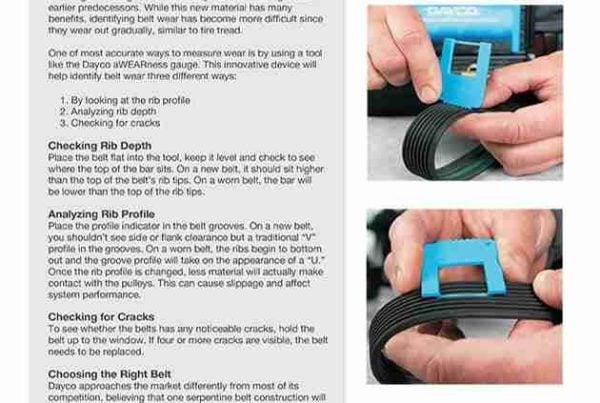
Belt wear can be difficult to detect because newer belts made with EPDM rubber tend to wear like tire tread, where there is material loss from the rib surface. A new belt will have a traditional “V” profile in the grooves between the ribs. On a worn EPDM belt, however, the groove profile will have the appearance of a “U”. One of the best ways…
How often should the serpentine belt be changed?
13 March 2025

How often should the serpentine belt be changed?

Regular inspection of all drive belts, tensioners and accessories should be recommended once the vehicle passes 60,000 miles. And when the belt is worn and ready for replacement, which is typically around 90,000 miles, the pulley and tensioner should also be replaced. That’s because the drive works as a system. Replacing only the belt will often result in short belt life because the tensioner likely…
What should I do if the belt is making a squealing noise?
13 March 2025

What should I do if the belt is making a squealing noise?

A squeal is usually caused by low bely tension or contamination. To rectify the problem, we suggest the following steps: Properly tension manual applications during installation (35 lbs. per rib) and then re-tension after 5 minutes of run-in (30 lbs. per rib). This allows the belt to seat in the pulleys. On vehicles with automatic belt tensioners, the tensioner pulley should turn freely without binding.…