
BELT IN OIL TECHNOLOGY IS GREAT NEWS FOR INDEPENDENTS
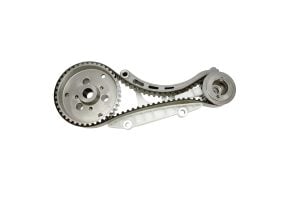 A growing number of vehicles are now driven by small capacity engines designed to provide sufficient power, but with reduced emissions and greater fuel efficiency. In order to deliver these characteristics, many utilise a belt in oil (BIO) solution to drive the timing system, as the weight and friction reduction benefits play a significant part in achieving them.
Dayco is a leading supplier of original equipment (OE) components to vehicle manufacturers (VMs) across Europe and a pioneer of BIO technology, initially with the world’s first example, fitted to the Ford ‘Lynx’ engine and subsequently with the Ford 1.0-litre EcoBoost, PSA 1.2-litre PureTech and Ford 2.0-litre EcoBlue engines. All these units are now found in a wide variety of vehicle applications, making them frequent visitors to the typical independent workshop, and therefore replacement BIO kits a staple product for the wholesalers.
Although BIO technology is a fantastic solution that helps these small and efficient engines to deliver incredible levels of power, alongside exceptionally low emissions and excellent fuel economy, to maintain this level of performance and to continue to operate as the manufacturer designed, they need to be serviced regularly and the VMs scheduled replacement interval strictly followed.
This provides a great revenue opportunity for the independent service and repair sector, and to assist factors to ensure technicians can complete a first rate job, Dayco has OE replacement BIO kits for these engines as part of its comprehensive aftermarket range.
Although factors don’t need to understand the minutiae of each installation process, it is worth stating that to further assist their workshop customers, and subsequently help to reduce unwanted returns/warranty claims, Dayco has produced another of its popular Technical Focus articles, this time on the Ford 2-litre EcoBlue engine used in many of the company’s vehicles, but perhaps most notably, in the Transit from 2016.
Reflecting the mileage these vehicles tend to cover and the sometimes unsympathetic conditions they are put through, it’s the Transit that is statistically more likely to require a scheduled timing system replacement. So, irrespective of which component they actually request, whenever factors receive an enquiry from their workshop customers for a Transit part, it is best practice to mention that it is imperative that technicians check the condition of both the oil and the belt, every time one of these vehicles enters the workshop.
Following these checks, if any evidence of diesel or debris is found in the oil, and if there is any visible damage whatsoever to the back of the belt, then belt replacement is necessary because the failure of the belt will have catastrophic consequences to the engine.
No matter what the condition however, Ford’s scheduled belt replacement interval must be taken as an absolute maximum, and that the oil pump belt is always also changed along with the timing belt. Naturally, Dayco carries the timing belt kit (KBIO17), oil pump belt (941121) and auxiliary belts (6PK1410S & 3PK715), in its comprehensive aftermarket range
Although BIO systems are becoming the favoured primary drive solutions with several manufacturers, and so belt replacement increasingly common, there is an aspect of the EcoBlue application that it is worth a factor pointing out to a workshop undertaking the work, and that’s the timing belt cover, which is a relatively thin metal sheet, that will be damaged during its removal and is therefore, not reusable. So, a replacement, along with the appropriate sealant, must also be sourced before the work is started, which is another revenue opportunity for astute factors.
For more information regarding the OE quality power transmission products in the Dayco range, please email: [email protected] or visit: www.daycoaftermarket.com